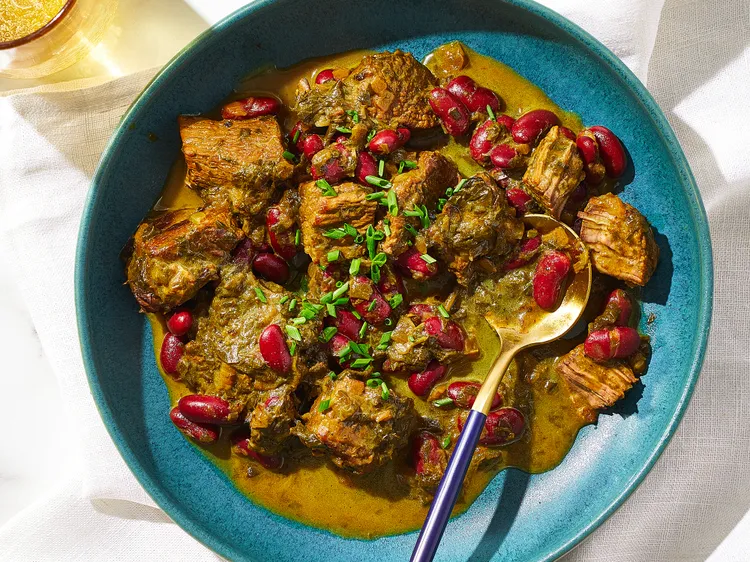
Ghormeh Sabzi Recipe – Classic Persian Herb Stew With Beef
SEO Title: Ghormeh Sabzi Recipe – Classic Persian Herb Stew
Meta Description: Learn how to make Ghormeh Sabzi with tender beef, fresh herbs, kidney beans, fenugreek, and dried Persian limes for a rich, aromatic Persian stew.
Focus Keyword: Ghormeh Sabzi Recipe
Suggested URL Slug: ghormeh-sabzi-recipe
Prep Time: 30 minutes
Cook Time: 2 hours 30 minutes
Total Time: 3 hours
Servings: 6
Course: Main Course, Stew
Cuisine: Persian, Iranian
Difficulty: Intermediate
Ghormeh Sabzi
Ghormeh Sabzi is one of the defining dishes of Persian cooking: a dark, aromatic herb stew where beef or lamb, beans, fenugreek, and dried Persian limes slowly simmer together until the flavors become deeply integrated.
Unlike a typical beef stew, the meat isn’t meant to dominate. The herbs are the heart of the dish.
Fresh parsley, cilantro, and green onions are finely chopped and sautéed until they lose their raw character and become darker and more concentrated. Fenugreek contributes the unmistakable aroma associated with Ghormeh Sabzi, while dried Persian limes provide a complex sourness that is citrusy, earthy, and gently bitter.
Beef chuck slowly becomes tender as these flavors develop around it. Kidney beans make the stew more substantial, and turmeric provides an earthy warmth that complements both the herbs and meat.
The finished stew should be dark green, fragrant, tangy, and rich, with a sauce substantial enough to cling to the meat and beans without becoming excessively thick.
Served with fluffy Persian rice, this Ghormeh Sabzi recipe is the kind of meal that demonstrates why some dishes simply cannot be rushed.
What Is Ghormeh Sabzi?
Ghormeh Sabzi is a traditional Persian stew made from sautéed herbs, meat, beans, onion, turmeric, and dried Persian limes. It is slowly simmered until the meat is tender and the herbs form a rich, dark green sauce.
There is no single universal formula. Recipes differ across Iran and between families. Lamb may replace beef, kidney beans may be exchanged for other beans, and the exact mixture of herbs can vary.
However, the combination of slowly cooked herbs, fenugreek, beans, meat, and dried lime gives the dish its recognizable character.
Why This Ghormeh Sabzi Recipe Works
A successful Ghormeh Sabzi depends on technique as much as ingredients.
The herbs are fried before simmering. This concentrates their flavor and removes raw, grassy notes.
Fenugreek is measured carefully. It is powerful enough that excessive quantities can create bitterness.
Beef chuck is cooked slowly. Its connective tissue softens during the long simmer, producing tender meat.
Dried Persian limes provide distinctive acidity. They create a deeper citrus flavor than fresh lemon juice alone.
Canned kidney beans are added later. Because they are already cooked, they don’t need to simmer for the entire cooking time.
Ingredients
For the Herb Mixture
- 2 packed cups finely chopped flat-leaf parsley
- 1½ cups finely chopped fresh cilantro
- 1 cup finely chopped green onions, white and green parts
- ¼ cup finely chopped fresh fenugreek leaves, or 1 tablespoon dried fenugreek leaves
- 3 tablespoons neutral cooking oil
For the Beef Stew
- 2 tablespoons neutral cooking oil
- 1 large yellow onion, finely diced
- 1½ pounds beef chuck, cut into 1½-inch cubes
- 1½ teaspoons ground turmeric
- 1 teaspoon kosher salt, plus more as needed
- ½ teaspoon freshly ground black pepper
- 4 cups hot water, plus more as needed
- 4 dried Persian limes
- 1 can (15 ounces) kidney beans, drained and rinsed
- 1 tablespoon fresh lemon juice, optional
The Essential Ghormeh Sabzi Herbs
Parsley
Parsley forms much of the green foundation of the stew.
Flat-leaf parsley is ideal because its robust flavor stands up well to prolonged cooking.
Cilantro
Cilantro brings citrusy herbal notes that mellow considerably during simmering.
Even people who associate cilantro with its raw flavor may find its character quite different after several hours of cooking.
Green Onions
Green onions contribute both freshness and gentle allium flavor.
Finely chop the green and white parts so they integrate completely with the other herbs.
Fenugreek
Fenugreek is one of the most important—and easiest to overuse—ingredients in Ghormeh Sabzi.
It gives the stew a distinctive aroma but can become bitter when used excessively or burned.
Measure it carefully.
What Are Dried Persian Limes?
Dried Persian limes, commonly known as limoo amani, are whole dried limes used to flavor a range of Persian and Middle Eastern dishes.
They taste considerably different from fresh lime.
Their character is tart and citrusy but also earthy, fermented, and mildly bitter. Long simmering allows these flavors to permeate the stew.
Piercing the limes before cooking allows the broth to circulate through them.
If you are particularly sensitive to bitterness, pierce and soak them in warm water for about 15 minutes before adding them to the stew.
How to Make Ghormeh Sabzi
1. Wash and Dry the Herbs
Wash the parsley, cilantro, green onions, and fresh fenugreek thoroughly.
Dry them extremely well with a salad spinner and clean kitchen towels.
This matters because wet herbs will steam instead of frying.
Finely chop the herbs by hand or pulse them carefully in a food processor. Stop before they turn into a paste.
2. Sauté the Herbs
Heat 3 tablespoons oil in a wide skillet over medium heat.
Add the parsley, cilantro, green onions, and fresh fenugreek.
Cook for 15 to 20 minutes, stirring frequently.
The herbs should lose moisture, decrease substantially in volume, and darken to a deeper green.
They should smell intensely aromatic but never burned.
If using dried fenugreek, add it during the final 3 to 5 minutes of sautéing.
Set the cooked herbs aside.
3. Cook the Onion
Heat 2 tablespoons oil in a large Dutch oven over medium heat.
Add the diced onion.
Cook for 7 to 9 minutes, stirring occasionally, until softened and lightly golden.
4. Brown the Beef
Add the beef chuck.
Cook for 6 to 8 minutes, turning occasionally, until the pieces develop light browning.
If necessary, brown the meat in batches to prevent overcrowding.
Add the turmeric, salt, and black pepper.
Stir for approximately 30 seconds.
5. Add the Herbs and Water
Pour in 4 cups hot water.
Add the sautéed herb mixture and stir well.
Bring the liquid to a gentle boil.
Immediately reduce the heat to low and partially cover the pot.
Simmer gently for 60 minutes.
6. Prepare the Dried Limes
Pierce each dried lime several times with a fork or the tip of a paring knife.
For a milder flavor, place the pierced limes in warm water for 15 minutes, then drain.
Add them to the stew after the initial hour of simmering.
7. Add the Kidney Beans
Drain and rinse the kidney beans.
Add them to the pot along with the dried limes.
Stir gently.
Continue simmering over low heat for another 60 to 90 minutes, or until the beef is very tender.
8. Monitor the Liquid
Check the stew periodically during the final hour.
Add hot water about ½ cup at a time if the liquid becomes too reduced before the meat is tender.
The finished Ghormeh Sabzi should have a concentrated sauce rather than a watery broth.
9. Adjust the Seasoning
Once the beef is fork-tender, taste the stew.
Adjust the salt and black pepper.
If you want additional acidity, stir in a small amount of fresh lemon juice.
Add it gradually—the dried limes should provide most of the characteristic sour flavor.
10. Rest Before Serving
Remove the stew from the heat.
Allow it to rest for 10 to 15 minutes.
Serve hot alongside Persian steamed rice.
How Do You Know When Ghormeh Sabzi Is Done?
Properly cooked Ghormeh Sabzi should look and taste noticeably different from the stew at the beginning of cooking.
The beef should be fork-tender rather than chewy.
The herbs should be dark green and fully incorporated into the sauce.
The sauce should be concentrated, not watery.
The dried lime flavor should be noticeable but balanced rather than overwhelmingly bitter.
Depending on the meat and pot, reaching this stage usually requires around 2 to 2½ hours of simmering.
Expert Tips for the Best Ghormeh Sabzi
Dry Your Herbs Before Frying
Removing water helps the herbs sauté efficiently.
Wet herbs require more time and tend to steam.
Chop the Herbs Finely
A fine chop produces a more cohesive sauce.
The goal is not to puree the herbs but to avoid large leafy pieces in the finished stew.
Fry the Herbs Patiently
The transformation of the herb mixture is essential.
It should become darker and more aromatic while retaining a deep green appearance.
Don’t Burn the Fenugreek
Fenugreek can quickly turn unpleasantly bitter.
When using dried fenugreek, adding it toward the end of the herb-frying stage provides more control.
Keep the Stew at a Low Simmer
Slow cooking allows the beef to tenderize while the herb and lime flavors develop.
Increasing the temperature does not produce the same result faster.
Don’t Add Too Much Water
Ghormeh Sabzi should finish with a concentrated sauce.
Add extra water only when necessary to keep the meat partially surrounded by liquid while it cooks.
Ghormeh Sabzi Variations
Lamb Ghormeh Sabzi
Replace beef chuck with 1½ pounds boneless lamb shoulder.
Lamb’s richer flavor pairs particularly well with fenugreek and dried lime.
Ghormeh Sabzi With Dried Kidney Beans
Use approximately ¾ cup dried kidney beans instead of canned.
Soak overnight, drain, and cook them properly until nearly tender before incorporating them into the stew.
Kidney beans require thorough boiling and should never be eaten raw or undercooked.
Ghormeh Sabzi With Pinto Beans
Replace the kidney beans with an equal quantity of drained and rinsed canned pinto beans.
The flavor and texture will differ slightly, but the substitution works well.
Vegetarian Ghormeh Sabzi
Omit the beef.
Use two 15-ounce cans of beans and add 8 ounces browned cremini mushrooms for extra savory depth.
Use water or a mild vegetable broth as the cooking liquid.
Gluten-Free Ghormeh Sabzi
This recipe does not require flour or wheat-based thickeners.
When cooking for someone who requires strict gluten avoidance, verify all packaged ingredients and spices individually.
What to Serve With Ghormeh Sabzi
Persian Steamed Rice
Rice is the essential partner for Ghormeh Sabzi.
Its mild flavor absorbs the concentrated herb sauce while providing balance to the tart dried limes.
Tahdig
Crisp, golden Persian rice crust provides a dramatic textural contrast to the soft meat and herb sauce.
Salad Shirazi
A fresh salad of cucumber, tomato, and onion adds coolness and acidity alongside the rich stew.
Yogurt
Plain yogurt or a Persian-style yogurt accompaniment provides a refreshing contrast.
Fresh herbs, radishes, and other crisp vegetables can also be served alongside.
Storage and Make-Ahead Notes
Making Ghormeh Sabzi Ahead
Ghormeh Sabzi is one of those dishes that can taste even more integrated after resting overnight.
Prepare the stew completely and cool it promptly.
Transfer to an airtight container and refrigerate.
Reheat gently the following day.
Refrigeration
Store Ghormeh Sabzi at 40°F (4°C) or below for 3 to 4 days.
Store cooked rice separately.
Freezing
The stew freezes well.
Cool completely before transferring to airtight freezer-safe containers.
Freeze for up to 3 months for best quality.
Thaw overnight in the refrigerator.
Reheating
Place the stew in a saucepan over medium-low heat.
Add a few tablespoons of water if the sauce has become too thick.
Stir occasionally and reheat previously cooked leftovers to 165°F (74°C).
Frequently Asked Questions
What does Ghormeh Sabzi taste like?
Ghormeh Sabzi tastes intensely herbaceous, savory, and tangy, with earthy undertones from fenugreek and turmeric and complex citrus flavor from dried Persian limes.
What herbs are used in Ghormeh Sabzi?
Common herbs include parsley, cilantro, green onions, and fenugreek. Specific combinations and proportions vary among Persian families and regional traditions.
Why is Ghormeh Sabzi dark green?
The herbs darken because they are finely chopped, sautéed, and then slowly cooked for an extended period.
Properly sautéed herbs contribute both the dark color and concentrated flavor.
Why is my Ghormeh Sabzi bitter?
Excess fenugreek, burned herbs, or too much bitterness extracted from dried limes can be responsible.
Use fenugreek conservatively and avoid burning the herb mixture.
Can you make Ghormeh Sabzi without dried Persian limes?
Yes, but the flavor will not be identical.
Fresh lemon or lime juice can supply acidity, although it lacks the fermented, earthy citrus character of dried lime.
Is Ghormeh Sabzi better with beef or lamb?
Both are excellent.
Beef chuck provides a familiar savory richness, while lamb shoulder produces a more distinctive, robust flavor.
Can I use canned kidney beans?
Yes.
Canned kidney beans are convenient because they are already fully cooked. Drain and rinse them before adding them during the later stage of simmering.
Does Ghormeh Sabzi taste better the next day?
It often does. Resting allows the herbs, dried lime, meat, and spices to become even more integrated.
Nutrition Information
Approximate values per serving, based on six servings and excluding rice:
| Nutrient | Amount Per Serving |
|---|---|
| Calories | 430 kcal |
| Protein | 31 g |
| Fat | 25 g |
| Saturated Fat | 7 g |
| Carbohydrates | 22 g |
| Fiber | 7 g |
| Sugar | 4 g |
| Sodium | 690 mg |
Nutrition values are estimates and will vary depending on the beef, beans, cooking oil, salt, and individual serving size.
Final Thoughts
Making a great Ghormeh Sabzi recipe is ultimately about giving each ingredient enough time to become something greater than it was at the beginning.
Fresh herbs are transformed through careful sautéing. Beef chuck slowly becomes tender. Dried Persian limes soften and perfume the sauce with their characteristic tang. Beans absorb the surrounding flavors, while turmeric and fenugreek provide warmth and aromatic depth.
None of these elements should completely dominate.
Instead, the finished Ghormeh Sabzi should taste cohesive: savory and herbaceous first, followed by rich meat, earthy spices, beans, and the distinctive sourness of dried lime.
Serve it generously with Persian rice and, if possible, crisp tahdig. The contrast between fluffy rice, crunchy crust, tender beef, and concentrated herb sauce is precisely what makes this slow-cooked Persian classic so memorable.
Google SERP and Discover Optimization
Primary Keyword: Ghormeh Sabzi Recipe
Secondary Keywords: Ghormeh Sabzi, Persian herb stew, Iranian stew, Persian beef stew, Ghormeh Sabzi with beef, Persian stew with dried lime, fenugreek stew, Persian food recipe.
Long-Tail Keywords: classic Ghormeh Sabzi recipe, how to make Ghormeh Sabzi, Persian herb stew with beef, Ghormeh Sabzi with kidney beans, beef Ghormeh Sabzi with dried lime, homemade Persian herb stew.
Suggested Google Discover Headline
This Slow-Simmered Ghormeh Sabzi Turns Fresh Herbs and Beef Into a Remarkable Persian Stew
Alternative Discover Headlines
- The Secret to Deeply Flavorful Ghormeh Sabzi Starts With the Herbs
- Ghormeh Sabzi Is the Rich, Tangy Persian Herb Stew Worth a Slow Simmer
- Tender Beef, Fresh Herbs and Dried Lime Make This Ghormeh Sabzi Unforgettable
- This Persian Herb Stew Gets Its Signature Flavor From One Powerful Ingredient
Featured Image SEO
Suggested Image Filename: ghormeh-sabzi-persian-herb-stew.jpg
Featured Image Alt Text: Ghormeh Sabzi Persian herb stew with tender beef, kidney beans, dried Persian lime, fresh herbs, and steamed Persian rice.
For Google SERP optimization, use the focus keyword naturally in the SEO title, H1, introduction, meta description, and a relevant subheading. Build broader topical relevance with terms readers genuinely associate with the dish, including Persian herb stew, fenugreek, dried Persian lime, beef chuck, kidney beans, and Persian rice.
Structure the page so that preparation time, cooking time, yield, ingredients, and numbered cooking instructions are immediately understandable. Any Recipe structured data added during publication should accurately match the visible recipe. Use a clear author byline and visible publication or update date, and connect the article to genuinely relevant Persian recipes through useful internal links.
For Google Discover, select an original landscape hero image at least 1200 pixels wide. The stew should remain the visual focus, with its characteristic dark green herb sauce and visible pieces of beef and beans. A serving of Persian rice and restrained garnishes can provide contrast while keeping the appearance faithful to the finished recipe.
Use an engaging headline that accurately represents the content. Original photography, demonstrated culinary knowledge, clear cultural context, practical cooking details, and a polished mobile reading experience should take priority over sensational language or excessive keyword repetition.