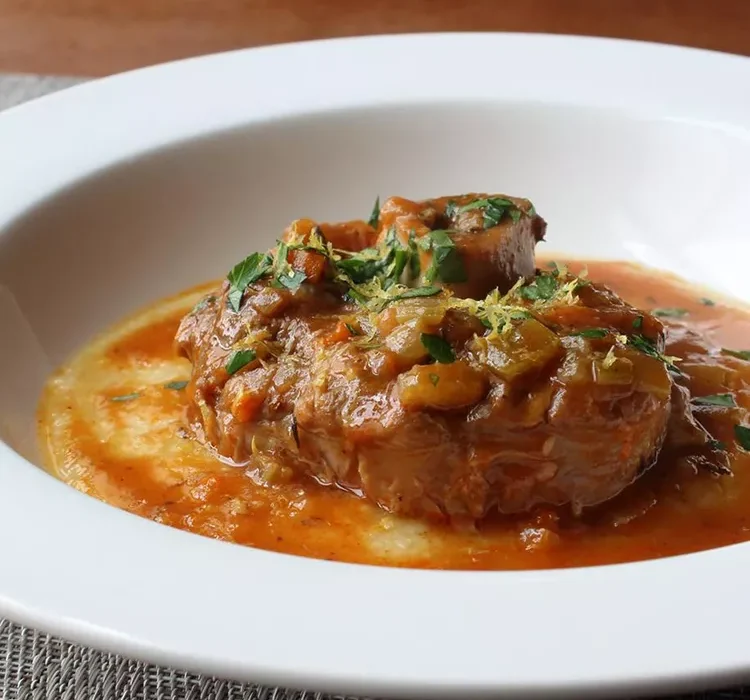
Braised Pork Osso Buco with Gremolata and Creamy Polenta
While the classic Osso Buco alla Milanese typically calls for veal shanks, the modern kitchen has embraced a more accessible, deeply flavorful alternative: Pork Osso Buco. Utilizing cross-cut pork shanks rather than veal, this dish offers a richer, more succulent experience with a price point that makes it suitable for both a refined Sunday dinner and a sophisticated weeknight meal.
The magic of Osso Buco lies in the braise. Through low-and-slow simmering in a fortified liquid of dry white wine, aromatic vegetables, and rich chicken stock, the tough connective tissues of the pork shank transform into a buttery, melt-in-your-mouth texture. The “bone with a hole” (the literal translation of osso buco) releases marrow into the sauce, creating a velvety consistency that is impossible to replicate with leaner cuts.
In this definitive guide, we explore the nuances of searing, deglazing, and aromatics to ensure your Pork Osso Buco achieves that coveted fall-off-the-bone tenderness, finished with a bright, citrusy gremolata to cut through the richness.
Ingredients
This recipe is designed to serve four adults generously. For the best results, source high-quality, heritage-breed pork if available, as the fat marbling significantly impacts the final silkiness of the sauce.
The Pork and Searing
-
4 Cross-cut pork shanks (approx. 12–14 oz each, cut 1.5 to 2 inches thick)
-
Kosher salt and freshly cracked black pepper (to taste)
-
1/2 cup All-purpose flour (for dredging)
-
3 tablespoons Neutral oil (such as grapeseed or avocado oil)
-
2 tablespoons Unsalted butter
The Braising Base (Mirepoix and Aromatics)
-
1 Large yellow onion, finely diced
-
2 Medium carrots, peeled and finely diced
-
2 Stalks celery, finely diced
-
4 Cloves garlic, minced
-
2 tablespoons Tomato paste
-
1 cup Dry white wine (Pinot Grigio or Sauvignon Blanc)
-
2 to 3 cups Low-sodium chicken stock (enough to come halfway up the shanks)
-
2 Sprigs fresh rosemary
-
4 Sprigs fresh thyme
-
2 Dried bay leaves
The Gremolata (Garnish)
-
1/4 cup Fresh flat-leaf parsley, finely chopped
-
1 tablespoon Lemon zest (from 1 large lemon)
-
1 Clove garlic, grated on a microplane
Step-by-Step Instructions
1. Preparation and Searing
The foundation of a great braise is the Maillard reaction. Start by tying each pork shank with kitchen twine around its circumference; this prevents the meat from falling away from the bone during the long cooking process.
Season the shanks aggressively with salt and pepper. Place the flour in a shallow dish and dredge each shank, shaking off any excess. In a large, heavy-bottomed Dutch oven, heat the oil and butter over medium-high heat. Once the butter foam subsides, add the shanks. Sear for 5–7 minutes per side until a deep golden-brown crust forms. Remove the shanks and set them aside on a plate.
2. Developing the Aromatics
Reduce the heat to medium. In the same pot, add the onion, carrots, and celery (the mirepoix). Sauté for 8–10 minutes, stirring occasionally, until the vegetables are softened and the onions are translucent.
Add the minced garlic and tomato paste. Cook for another 2 minutes, stirring constantly. You want the tomato paste to darken to a rust color, which indicates the sugars have caramelized, adding depth to the final sauce.
3. Deglazing the Pot
Pour in the white wine. Use a wooden spoon to scrape up all the browned bits (the fond) from the bottom of the pot. This is where the concentrated flavor lives. Let the wine simmer and reduce by half, about 3–4 minutes.
4. The Braise
Return the pork shanks and any accumulated juices to the Dutch oven. Pour in the chicken stock until it reaches about halfway up the sides of the meat. Add the rosemary, thyme, and bay leaves.
Bring the liquid to a gentle simmer, then cover the pot with a tight-fitting lid. Transfer to a preheated oven at 325°F (163°C). Braise for 2.5 to 3 hours. At the 90-minute mark, gently flip the shanks to ensure even cooking. The meat is done when it offers no resistance to a fork.
5. Finishing the Sauce and Gremolata
While the meat rests, prepare the gremolata by mixing the parsley, lemon zest, and grated garlic in a small bowl.
Carefully remove the shanks from the pot and place them on a warm platter. Discard the herb sprigs and bay leaves. If the braising liquid is too thin, place the Dutch oven on the stovetop over medium-high heat and simmer for 5–10 minutes until it reduces to a coating consistency. Taste and adjust seasoning with salt or a squeeze of lemon juice.
Expert Tips & Variations
Professional Cooking Tips
-
Don’t Rush the Sear: The crust developed in step one provides the color and savory backbone of the sauce. If the pot is crowded, sear in batches.
-
Consistency is Key: Ensure your mirepoix is diced uniformly. This ensures the vegetables melt into the sauce at the same rate.
-
The Rest Period: Like a steak, braised meat benefits from resting. Let the shanks sit in the reduced sauce for 10 minutes before serving to reabsorb moisture.
Substitutions and Variations
-
The Red Wine Alternative: For a heavier, more rustic flavor profile, swap the white wine for a dry red (like Chianti or Merlot) and use beef stock instead of chicken stock.
-
Vegetable Additions: Add 1 cup of cremini mushrooms during the sauté phase for an earthy, umami boost.
-
Gluten-Free Option: Use a gluten-free all-purpose flour blend for dredging, or omit the flour entirely and reduce the sauce slightly longer at the end to achieve the desired thickness.
Serving Suggestions
Pork Osso Buco is a rich, savory dish that requires a base to soak up the luxurious sauce and a bright element to balance the fats.
-
The Base: Serve over a bed of Creamy Saffron Polenta or Risotto alla Milanese. If you prefer a more neutral pairing, wide egg noodles or garlic mashed potatoes work beautifully.
-
The Garnish: Never skip the Gremolata. The raw garlic and lemon zest provide a sharp “high note” that cuts through the unctuousness of the pork.
-
The Side: A simple side of blanched green beans with lemon or a bitter arugula salad with a light vinaigrette complements the richness of the braise.
Storage & Make-Ahead Notes
Braising is one of the few cooking methods where the dish actually tastes better the next day, as the flavors have more time to meld.
-
Refrigeration: Store leftovers in an airtight container with the sauce for up to 4 days.
-
Freezing: This dish freezes exceptionally well. Place cooled shanks and sauce in a freezer-safe bag or container for up to 3 months. Thaw in the refrigerator overnight before reheating.
-
Reheating: Reheat gently in a covered saucepan over medium-low heat. Add a splash of water or stock if the sauce has thickened too much in the fridge. Avoid the microwave, which can toughen the meat.
Nutrition Information (Per Serving)
The following values are estimates based on one shank with sauce (excluding polenta).
| Nutrient | Amount per Serving |
| Calories | 580 kcal |
| Protein | 42g |
| Total Fat | 36g |
| Saturated Fat | 14g |
| Carbohydrates | 18g |
| Fiber | 3g |
| Sugar | 5g |
| Sodium | 840mg |